
Independent review. We are not affiliated with the manufacturer of FemiCore. We may earn a commission if you purchase through our affiliate links, at no additional cost to you.
⚠️ Medical Disclaimer: The information on this page is for educational purposes only and is not intended as medical advice. Dietary supplements are not drugs and are not evaluated by the FDA to diagnose, treat, cure, or prevent any disease. Always consult a qualified healthcare provider before starting any new product. Individual results may vary.
Before deciding on Femicore Ingredients List, compare the current price, return terms, and what the seller actually promises.
Table of Contents
Table of Contents
FemiCore Ingredients List: Quick 2026 Verdict
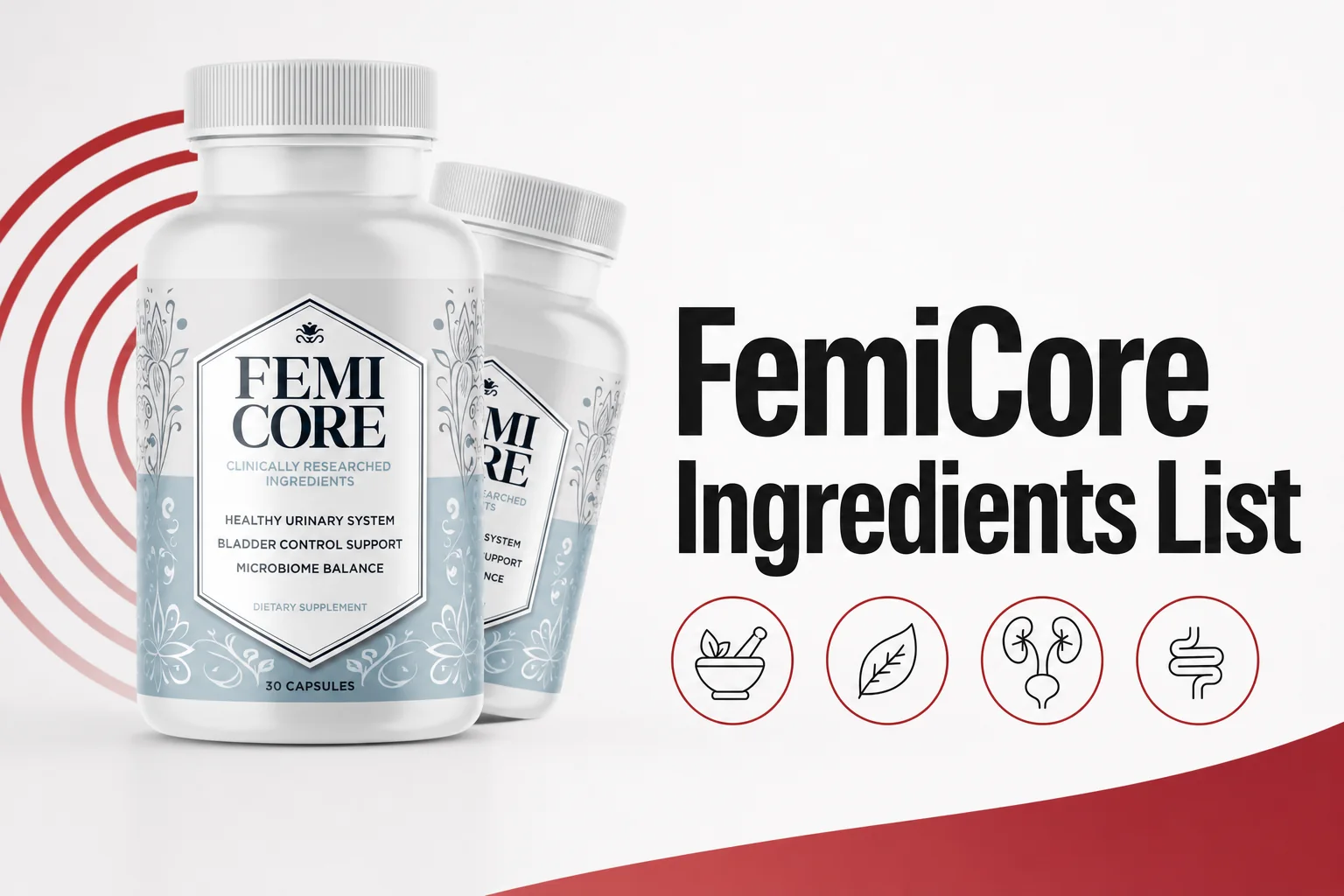
The FemiCore ingredients list features a proprietary blend of four herbal extracts and five probiotic strains—but does the actual label back up the marketing? If you’re searching for what’s in FemiCore or want to compare its formula to clinical studies, here’s the honest bottom line: The blend includes well-known plant extracts like cranberry and bearberry, plus a mix of specific Lactobacillus probiotic strains.
But individual ingredient amounts aren’t listed and some components are only supported by limited evidence for bladder comfort. Transparency and suitability vary based on your health needs and dietary restrictions.
What Reviewers Commonly Report — Buyers often mention interest in the cranberry extract, hoping for urinary comfort or reduced urgency, and curiosity about the probiotic blend for bladder or vaginal balance. A useful Femicore Ingredients List review separates verifiable details from promotional language.
The lack of dose transparency comes up regularly, especially among well-read shoppers comparing it to other women’s urinary supplements.
Mixed Signals and What They Mean — Some users report modest urinary comfort over a few weeks, mostly attributed to the cranberry and probiotics. Readers assessing Femicore Ingredients List should check the product details and the source behind each important claim.
However, others point out that without clear individual doses or clinical testing of the full formula, it’s hard to know what to expect—or how much benefit is due to the blend versus changes in routine.
Bottom line: FemiCore offers a plant-probiotic combo with a familiar ingredient mix, but doesn’t disclose specific component amounts or allergen details. Any conclusion about Femicore Ingredients List should reflect the available evidence, not just testimonials or advertising.
If clear dosing or clinical backing is important to you, you may want to consider alternatives or talk to your provider first. Check the official listing for current details and refund conditions before buying Femicore Ingredients List.
FemiCore – Key Facts at a Glance| Feature | Details |
|---|---|
| Product Name | FemiCore |
| Type | Women’s bladder & urinary support supplement |
| Form | Capsule (gelatin, size and animal source not specified) |
| Serving / Daily Dose | 2 capsules |
| Key Ingredients (blend totals, per daily dose) | Herbal Blend 350 mg: Mimosa pudica seed, Cranberry extract (Vaccinium macrocarpon, 30% PAC), Bearberry leaf, Granular Berberine HCl (8%). Probiotic Blend 50 mg: Lactobacillus crispatus LCr86, L. acidophilus LA88, L. plantarum N13, L. gasseri LG08, L. casei LC16 |
| Ingredient Amounts | Only blend totals; no individual mg or CFU doses listed |
| Best For | Adults seeking non-prescription bladder/urinary support; people interested in cranberry and probiotic blends |
| Dietary Suitability | Not stated (vegan/vegetarian, allergen, or animal capsule details unspecified) |
| Availability | Online via official website only |
Honest FemiCore Buyer Feedback: Pros, Concerns & What’s Missing
In short, user feedback about the FemiCore ingredients list is mixed—buyers are attracted by familiar botanicals and probiotics but want more dosing detail.
What Buyers Like
Recognizable ingredients — Many appreciate seeing cranberry extract and a blend of Lactobacillus strains, which are also found in some urinary health studies. Whether Femicore Ingredients List is suitable depends on individual needs, the product details, and the evidence available.
Simple capsule format — Buyers say the two-capsule daily dose is easy to swallow, compared to gummies or flavored powders. Treat claims about Femicore Ingredients List cautiously unless they can be confirmed by reliable, independent sources.
Main Complaints and Gaps
Lack of dosage details — The most frequent complaint: only blend totals are shown, with no breakdown for each herbal or probiotic component. Compare Femicore Ingredients List with alternatives using transparent criteria rather than promises alone.
Gelatin origin not disclosed — If you’re vegetarian, vegan, or avoid pork/beef gelatin, FemiCore’s capsule source is unspecified. When researching Femicore Ingredients List, separate independently verifiable information from claims made in advertisements.
No allergen statement — There is no information about soy, dairy, gluten, or other allergens on the main supplement facts or FAQ pages. A balanced assessment of Femicore Ingredients List should include limitations as well as any potential advantages.
Bottom line
>> Read The Ingredients, Science & Customer Feedback On The Official Website
People searching for transparency or special dietary labeling may leave disappointed, but those wanting cranberry and specific probiotics in one pill find the formula familiar and convenient. Readers considering Femicore Ingredients List can use these checks to make a more informed comparison.
How Effective Is FemiCore? An Ingredient-By-Ingredient Analysis
In short, the “femicore ingredients list” includes several botanicals and probiotics with some history in bladder wellness, but the formula itself does not have direct published trials.
What the Evidence Shows
Cranberry extract (PAC standardized) — Cranberry’s proanthocyanidins (PAC) are well-supported in research for reducing some urinary tract infections, though not bladder leakage. Studies typically use 36–72 mg PAC per day, but FemiCore doesn’t state its exact dose. Before relying on claims about Femicore Ingredients List, look for clear product details and trustworthy supporting evidence.
Bearberry leaf — Traditionally used for mild urinary complaints in short courses (per European Medicines Agency), but lacks bladder leakage or overactive bladder evidence in reputable studies. A careful comparison of Femicore Ingredients List starts with the seller’s terms, the published details, and independent sources.
Berberine HCl — Most human trials relate to blood sugar and gut health, not directly bladder control or UTI. When reviewing Femicore Ingredients List, look for specific information that a reader can independently verify.
Mimosa pudica seed — Traditionally used for gut “cleansing” or mild anti-inflammatory effects, but no published clinical research supports urinary or bladder benefits. The strongest assessment of Femicore Ingredients List explains both what is known and what remains uncertain.
Probiotic blend — FemiCore includes 5 well-known Lactobacillus strains, with L. crispatus (LCr86) drawing the most attention. There is one clinical trial (NCT06830122, vaginal outcome, no results yet) for LCr86, but none show oral probiotics substantially improving urinary symptoms or bladder control in peer-reviewed, published trials. Anyone comparing Femicore Ingredients List should confirm that the product page and seller policies are current.

Typical Experiences (Anecdotes Only)
Subtle benefit, not dramatic — Reddit and other forum users sometimes report gradual reductions in urinary urgency, but these reports are rare and unverified. No supplement review platform or third-party site verifies wider results or complaints. For Femicore Ingredients List, a transparent review should distinguish confirmed facts from opinions and promotional claims.
Why results differ — FemiCore’s herbal blend is relatively small (350 mg for four botanicals), and the probiotic blend lists strains only by mix, not CFU or mg, making each component’s impact hard to estimate for your body. Check whether the evidence cited for Femicore Ingredients List directly supports the claim being made.
Bottom line: There is real evidence for cranberry in UTI reduction, but no peer-reviewed data for most other FemiCore ingredients—or for the formula as a whole. Your mileage may vary and expectations should be set accordingly. A sensible buying decision about Femicore Ingredients List weighs the price, terms, alternatives, and available evidence.
Pros and Cons Highlighted by Users Asked About the FemiCore Ingredients List
In short, FemiCore’s ingredients list is both an asset and a drawback: the combination is familiar, but label transparency isn’t as strong as some hope.
User-reported positives:
All-in-one formula — Having cranberry, bearberry, and probiotics in the same supplement is appealing to those tired of juggling pills.
Main negatives:
No clear research match — Without individual doses, it’s impossible to compare to clinical research, leaving scientifically-minded users wanting more detail.
Bottom line: The familiar ingredient blend may help some users feel more proactive about bladder health, but science-driven buyers may turn elsewhere for precise, research-aligned dosing.
FemiCore Compared to Other Women’s Bladder or Urinary Supplements
In short, FemiCore stands out for its mix of cranberry, bearberry, and probiotics but falls short on label transparency compared to some UTI/urinary products from big-name US supplement brands.
- Most US cranberry supplements: Typically disclose the actual PAC mg; FemiCore lists only the blend’s combined weight.
- Mainstream probiotics for women’s health: Usually provide CFU counts (colony-forming units) per strain and capsule, while FemiCore only lists blend weight and names for five strains.
- Multi-herbal blends (e.g., for menopause/urinary support): Commonly found in health stores, but most at least list the exact dose per plant extract and offer dietary/allergen labeling.
FemiCore’s lack of these details puts informed buyers at a disadvantage if they want direct comparison or need to check for sensitivities. If transparency or precise research matching is a priority, you may want to compare formulas with independently verified labels or full FDA-compliant supplement facts.
>> See Full Details, Label Information & Refund Terms On The Official Website
Pros and Cons of FemiCore
- ✅Pros
- Multi-ingredient formula – Combines cranberry, bearberry, berberine, mimosa pudica, and 5 probiotics in one pill.
- Straightforward regimen – Two capsules daily, no complicated dosing or powders needed.
- PAC-standardized cranberry extract present – Includes an active form seen in clinical studies, though dose transparency is lacking.
- Includes less common Lactobacillus strains – Some women’s probiotics don’t feature L. crispatus or plantarum.
- 60-day refund window – Official site notes a money-back guarantee within 60 days.
- ❌Cons
- Proprietary blend labeling – No individual mg or CFU counts for any herb or probiotic.
- Real clinical dose likely lower than some studies – The total blend amount suggests ingredient levels may be below research-proven ranges.
- Gelatin type and allergen status undisclosed – Not suitable for those needing vegan or religiously compliant capsules.
- No published clinical trials on the full formula – Most research cited is for ingredients in isolation.
- Not designed for UTI or leakage treatment – Marketed for support only, not as a disease treatment or cure.
- Only sold via official website – Not available in US retail stores or on major e-commerce platforms.
>> Check Current Package Options & Official Pricing Here
Potential Side Effects, Allergens, and Safety Issues for FemiCore Users
In short, most people tolerate the ingredients in FemiCore well, but some dietary, allergy, and medication cautions apply.
Herbal Blend Safety: What to Watch For
Mild GI upset possible — Ingredients like cranberry, bearberry, or mimosa pudica may cause stomach discomfort in sensitive users. Berberine can interact with certain medications (especially for diabetes); always consult a healthcare provider if taking medicine or managing a chronic condition.
Probiotic Blend: General Risks
Tolerability is usually high — Most healthy adults can take common Lactobacillus strains safely, but those who are immunocompromised, recently hospitalized, or have complex health histories should get doctor clearance before starting any probiotic supplement.
Unknowns: Gelatin, Additives, Allergen Information
Not vegetarian/vegan certified — The source and composition of the gelatin capsule are not specified, meaning FemiCore may not be suitable for those avoiding pork/beef or animal-based capsules.
No allergen details provided — The label or website does not clarify whether soy, gluten, dairy, or tree nut cross-contamination is possible, making it a less clear choice for those with strict allergy needs.
Bottom line: While there are no widespread safety issues reported, always check with your doctor if you’re pregnant, nursing, on chronic meds, or require special dietary consideration.

FemiCore Ingredients at a Glance: Label vs. Research Table
| Ingredient | Main Role | Evidence Level |
|---|---|---|
| Mimosa pudica seed | Traditionally for gut support; theorized for anti-inflammatory activity | Limited |
| Cranberry extract (Vaccinium macrocarpon, 30% PAC) | UTI prevention and urinary comfort (in some studies) | Moderate to Strong (if PAC dose is sufficient) |
| Bearberry leaf | Traditional urinary herb; may support comfort | Limited |
| Berberine HCl (8%) | Metabolic/gut support; limited bladder evidence | Limited |
| Lactobacillus crispatus LCr86 | Probiotic strain, vaginal/urinary tract focus | Emerging (limited direct research) |
| L. acidophilus LA88 | Probiotic, general women’s microbiome | Emerging |
| L. plantarum N13 | Probiotic, gut/women’s microbiome | Emerging |
| L. gasseri LG08 | Probiotic, gut/urinary support | Emerging |
| L. casei LC16 | Probiotic, women’s microbiome | Emerging |
*Note: Blend totals only (Herbal: 350 mg; Probiotic: 50 mg). No individual mg/CFU info means none of the ingredients can be directly matched to studied therapeutic doses.
>> Looking For A Natural Wellness Option? See The Full Details Here
FemiCore Ingredients Review: Who Is It Best For? Who Should Skip?
In short, FemiCore may appeal to you if you want a simple, all-in-one formula with probiotics and botanicals designed generally for urinary well-being, but it’s not for those with strict dosing or dietary needs.
Best for…
Adults wanting a routine-support product — If you want to support urinary comfort with familiar ingredients and don’t need medical-grade dosing, FemiCore is an easy two-capsule daily blend.
Those attracted by cranberry & probiotics together — People interested in “stacking” cranberry, bearberry, and Lactobacillus strains for day-to-day health may find the approach convenient.
Who Should Skip (or Consult a Pro First)…
If you need precise dosing — Anyone seeking doctor-matched, evidence-level dosages, transparent probiotic counts, or want to compare mg-for-mg with published studies will likely be frustrated.
Strict vegans/vegetarians — The capsule may be bovine or porcine gelatin (not stated), so FemiCore isn’t suitable for ethical, religious, or dietary avoidance.
Allergy-sensitive users — With no allergen-specific disclosure, those with food allergies or sensitivities may need to play it safe or contact the manufacturer directly.
Anyone seeking treatment, not support — FemiCore is not a medical-grade formula and is not intended to treat, cure, or prevent any diagnosed condition.
>> Click Here To Visit The Official Website & Review The Latest Offers
Overall: FemiCore is potentially a fit for women looking for a blend of familiar botanicals and women’s probiotics, but not if you need maximum transparency, vegan compliance, or medical dosing precision.
FAQ: FemiCore Ingredients List and Label Transparency
What ingredients are in FemiCore?
The FemiCore ingredients list shows a proprietary blend of four plant extracts (mimosa pudica seed, cranberry extract standardized to 30% PAC, bearberry leaf, berberine HCl) and a probiotic blend with five Lactobacillus strains. The capsule itself is gelatin-based (origin not specified).
Does FemiCore contain cranberry extract?
Yes, FemiCore’s herbal blend includes cranberry extract (Vaccinium macrocarpon), and it is standardized to 30% proanthocyanidins (PAC) as listed on the label. However, the exact amount of cranberry or PAC per serving is not shown.
Are the ingredient amounts disclosed?
No. The label provides only the total weight of each blend (350 mg herbal, 50 mg probiotic) without breaking down the amount for each individual ingredient or probiotic strain.
Is FemiCore vegan or vegetarian?
It’s not clear—FemiCore uses a gelatin capsule, but the animal source (bovine or porcine) is not stated anywhere on the supplement facts or FAQ, making it unsuitable for some strict vegans or vegetarians.
Are there any allergens in FemiCore?
The label and FAQ do not specify if FemiCore contains or is manufactured with common allergens like soy, dairy, gluten, or tree nuts. There is no allergy or cross-contamination statement from the manufacturer currently available.
Why are blend amounts listed instead of individual doses?
Under US FDA supplement rules, brands can list combined proprietary blend weights with ingredients ordered by descending mass, without disclosing each component’s exact dose. This is common with botanical and probiotic blends—but means buyers can’t know precise mg/CFU per ingredient.
Related guides
- Does Femicore Really Work: how to avoid fake sellers and find the real store
- Femicore Pills: where to buy safely and how to spot counterfeit sellers
- Buy Femicore Supplement: red flags and the evidence-based verdict
- Femicore Pills Side Effects: what each ingredient does and what research shows
- Where To Buy Femicore Supplement: where to buy safely and how to spot counterfeit sellers
This article is for information only and is not medical advice. Talk to a doctor or pharmacist before starting any supplement, especially if you are pregnant, take medication, or have a health condition.
Research notes
Sources consulted during preparation (listed without external hyperlinks): usfemicore.com, myfemicore.com, genconbd.alabama.gov, reddit.com, femicoredaily.com.
1 thought on “FemiCore Ingredients List: Full Label Breakdown & Benefits”