If you’ve spent any time researching longevity, cellular health, or biohacking trends over the past year, you’ve probably come across NAD+ therapy. What was once a niche treatment discussed primarily in wellness circles has gradually moved into the mainstream, attracting attention from professionals, fitness enthusiasts, entrepreneurs, and adults looking for ways to maintain their energy as they age.
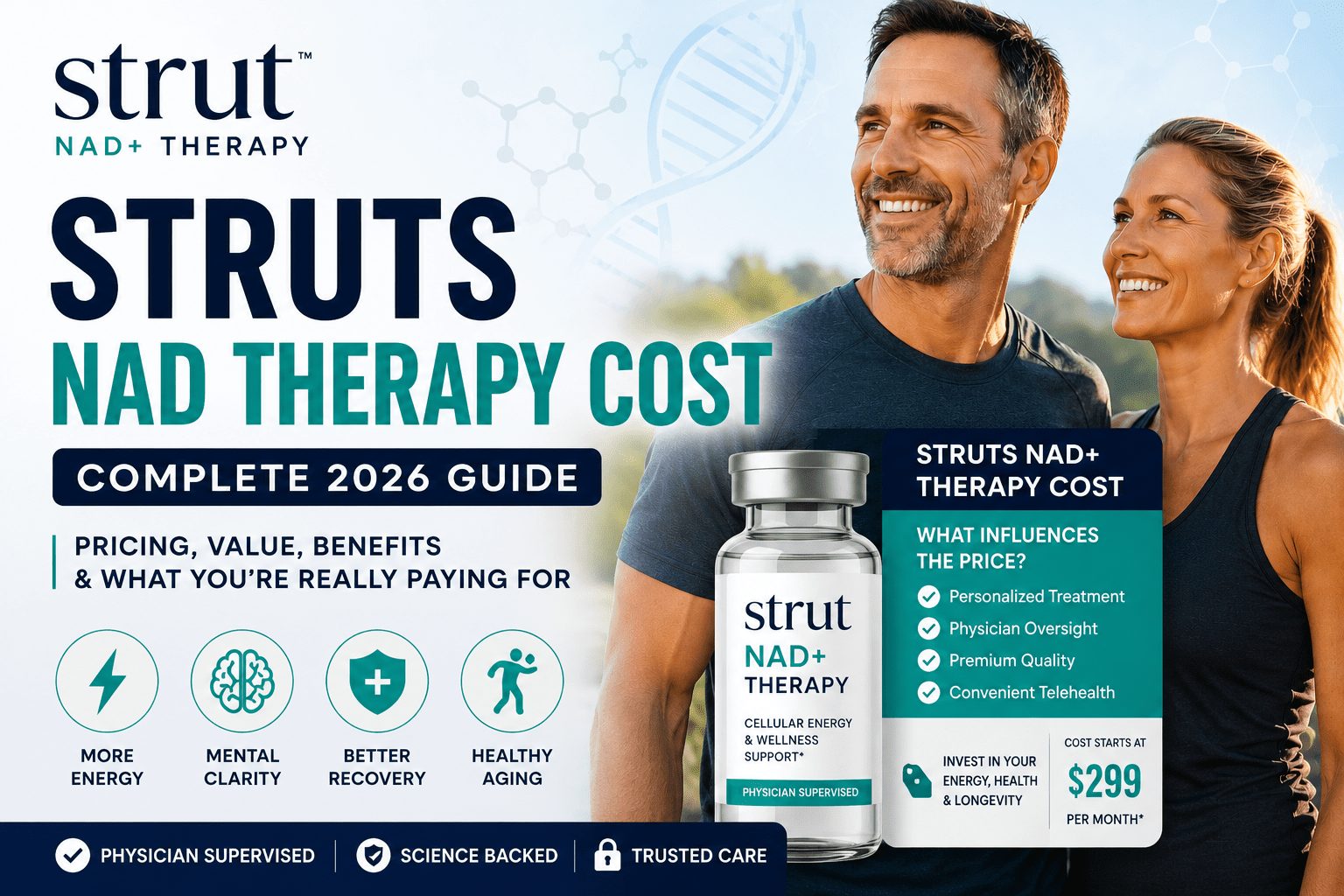
Yet despite all the discussion around potential benefits, one practical question continues to dominate online searches: What is the actual Struts NAD Therapy cost, and is it worth the investment?
It’s a reasonable question.
Health and wellness spending has increased dramatically in recent years, and consumers have become more cautious about where they put their money. People are no longer impressed by flashy promises alone. They want transparency, value, and evidence that a program fits their personal goals.
Having reviewed dozens of wellness programs over the years, I’ve noticed a pattern. Most people aren’t necessarily searching for the cheapest option available. They’re trying to determine whether the value they receive justifies the price they pay.
That’s exactly how NAD+ therapy should be evaluated.
Instead of asking only, “How much does it cost?” a better question might be, “What am I actually getting for that cost?”
Let’s take a closer look.

Why NAD+ Therapy Has Become So Popular
Before discussing pricing, it’s important to understand why NAD+ therapy has generated so much interest in the first place.
NAD+, short for Nicotinamide Adenine Dinucleotide, is a coenzyme found in every living cell. It’s involved in hundreds of biological processes, but perhaps its most important role is helping cells convert nutrients into usable energy.
Think of NAD+ as part of your body’s internal power system.
Every heartbeat, muscle contraction, thought, and recovery process depends on energy production happening at the cellular level. Without adequate NAD+, those systems cannot function efficiently.
Researchers have known for years that NAD+ levels naturally decline as we age. Some studies suggest these reductions may influence energy production, recovery capacity, metabolic efficiency, and other biological functions associated with aging.
This growing body of research has fueled interest in therapies designed to support healthy NAD+ levels.
As a result, consumers are increasingly evaluating not only the potential benefits but also the overall Struts NAD Therapy cost and whether the program aligns with their wellness priorities.
The Real Question Isn’t Price—It’s Value
One mistake consumers often make when comparing wellness programs is focusing exclusively on price.
Imagine comparing two gym memberships.
One costs $20 per month and offers basic equipment. Another costs $100 per month and includes personal coaching, nutrition guidance, premium facilities, and specialized classes.
Which one is more expensive?
Technically, the second option.
But which one delivers more value depends entirely on the individual’s goals.
The same principle applies when evaluating Struts NAD Therapy cost.
You’re not simply purchasing a product.
You’re paying for a combination of:
- Medical oversight
- Personalized recommendations
- Treatment access
- Convenience
- Professional evaluation
- Ongoing support
Viewed through that lens, pricing becomes only one piece of a much larger equation.
Why Telehealth Has Changed the Wellness Industry
One reason Strut Health has attracted attention is its telehealth-based approach.
A decade ago, someone interested in NAD+ therapy often had limited options. Most treatments required visits to specialized clinics where patients would spend hours connected to IV infusions.
While those clinics still exist, telehealth has dramatically changed consumer expectations.
People now expect healthcare and wellness services to be:
- Convenient
- Accessible
- Flexible
- Time-efficient
For busy professionals especially, convenience carries real value.
I’ve spoken with individuals who simply couldn’t justify taking half a day off work for recurring clinic appointments. The travel time alone created a barrier that prevented them from exploring certain wellness options.
Telehealth removes much of that friction.
When evaluating Struts NAD Therapy cost, many users aren’t only paying for treatment. They’re also paying for accessibility and time savings.
For many Americans, that’s a meaningful advantage.
Understanding What Influences NAD+ Therapy Pricing
One of the most common misconceptions is that there should be a single universal price for NAD+ therapy.
In reality, several factors can influence cost.
Treatment Goals Matter
Not everyone begins NAD+ therapy for the same reason.
Some individuals are focused on:
- Maintaining energy levels
- Supporting healthy aging
- Enhancing recovery
- Improving mental focus
- Optimizing overall wellness
Because goals vary, treatment recommendations may vary as well.
This is one reason discussions about Struts NAD Therapy cost often produce different answers from different users.
Physician Oversight Adds Value
In today’s supplement market, consumers can purchase almost anything online with a few clicks.
However, physician-supervised programs operate differently.
Medical evaluation helps determine:
- Whether a person is a suitable candidate
- Potential safety considerations
- Appropriate treatment recommendations
- Ongoing monitoring needs
While physician oversight contributes to overall cost, it also provides an additional layer of confidence that many consumers appreciate.
Convenience Carries Its Own Cost
Convenience is often overlooked when comparing wellness expenses.
Consider a professional earning a substantial hourly wage.
If a treatment requires multiple in-person appointments each month, the hidden costs may include:
- Lost work time
- Transportation expenses
- Scheduling challenges
- Opportunity costs
Viewed this way, convenience becomes part of the value equation.
What Consumers Are Really Looking For
After reviewing wellness trends for years, I’ve found that most consumers aren’t chasing miracle cures.
They’re searching for practical improvements.
The conversations usually sound something like this:
“I want more consistent energy.”
“I don’t want to feel exhausted every afternoon.”
“I’d like to stay active as I get older.”
“I want to perform at my best mentally.”
Those goals feel realistic because they are.
People aren’t necessarily expecting NAD+ therapy to transform their lives overnight.
They’re looking for support in areas that matter to daily quality of life.
This perspective is important when evaluating Struts NAD Therapy cost because expectations strongly influence perceived value.
How NAD+ Therapy Fits Into a Broader Wellness Strategy
One thing worth emphasizing is that NAD+ therapy is rarely viewed as a standalone solution.
Most health experts would agree that wellness outcomes depend on multiple factors, including:
- Nutrition
- Sleep quality
- Exercise habits
- Stress management
- Recovery practices
- Medical care
Therapies like NAD+ are typically considered part of a larger wellness strategy rather than a replacement for healthy habits.
The most successful users tend to approach treatment this way.
They view NAD+ support as one component of an overall investment in their health.
When framed in that context, discussions about Struts NAD Therapy cost become less about spending and more about long-term wellness planning.
The Cost of Doing Nothing
This may sound unconventional, but it’s worth considering.
When evaluating any wellness investment, there’s another question people rarely ask:
What is the cost of ignoring health altogether?
Fatigue, burnout, poor recovery, and declining physical performance all carry consequences.
Those consequences may include:
- Reduced productivity
- Lower quality of life
- Missed opportunities
- Increased healthcare needs later
Of course, no therapy guarantees specific outcomes.
But many consumers are beginning to think differently about preventive wellness.
Rather than waiting for problems to develop, they prefer taking proactive steps to support long-term health.
This shift in mindset helps explain why conversations about Struts NAD Therapy cost continue to grow each year.
Is Struts NAD Therapy Expensive?
The answer depends entirely on perspective.
Compared to buying a bottle of vitamins, NAD+ therapy will likely appear expensive.
Compared to recurring luxury wellness treatments, private health coaching, or frequent clinic-based therapies, some consumers may find it more reasonable.
The key is comparing the program to alternatives that serve similar goals.
Price alone rarely tells the whole story.
Value, convenience, professional oversight, and personal priorities all play important roles.
What Existing Users Tend to Value Most
Whenever a wellness treatment becomes popular, it’s easy to focus solely on marketing claims. But if you spend time reading user experiences, a different picture often emerges.
Most people aren’t talking about dramatic overnight transformations. Instead, they describe subtle improvements that become noticeable over time.
For example, some users say they feel more productive during long workdays. Others mention fewer afternoon energy crashes or improved consistency with exercise routines. While individual experiences vary, a common theme appears repeatedly: people are looking for sustainable support rather than quick fixes.
This matters when evaluating Struts NAD Therapy cost because the perceived value often comes from cumulative benefits rather than immediate results.
Think of it like improving your sleep habits. One good night’s sleep won’t change your life. But months of better sleep can have a meaningful impact on how you feel and perform.
Many wellness enthusiasts view NAD+ therapy through a similar lens.
The Hidden Costs of Modern Living
One reason NAD+ therapy resonates with so many Americans is that modern lifestyles place extraordinary demands on the body.
Consider the average day for a working adult:
- Hours spent in front of screens
- Constant digital notifications
- Work-related stress
- Irregular sleep schedules
- Processed foods
- Limited recovery time
Even highly motivated individuals often struggle to maintain ideal health habits consistently.
As a result, many people feel drained despite doing their best to stay healthy.
This is where conversations around cellular health have become increasingly relevant. Rather than focusing exclusively on symptoms like fatigue, wellness experts are paying more attention to the underlying biological systems that influence energy production and recovery.
For consumers evaluating Struts NAD Therapy cost, this broader perspective often shapes their decision-making process.
They’re not necessarily buying a treatment for a specific symptom. They’re investing in what they hope will be stronger long-term wellness foundations.
Why Adults Over 40 Are Driving Demand
Although interest in NAD+ therapy spans multiple age groups, adults over 40 represent one of the fastest-growing demographics.
The reason is fairly simple.
Many people notice subtle changes during midlife:
- Recovery takes longer.
- Energy becomes less predictable.
- Sleep quality may decline.
- Physical performance requires more effort.
- Mental fatigue becomes more noticeable.
These changes don’t happen overnight, but they accumulate gradually.
For years, consumers largely accepted these shifts as unavoidable consequences of aging. Today, many are taking a more proactive approach.
Rather than waiting until problems become significant, they seek wellness strategies that may help support healthy aging.
This trend helps explain why searches related to Struts NAD Therapy cost continue increasing among middle-aged adults who prioritize preventive health.
A Different Way to Think About Healthcare Spending
Historically, many people spent money on healthcare only when something went wrong.
You felt sick.
You visited a doctor.
You addressed the problem.
The modern wellness movement has introduced a different philosophy.
Increasingly, consumers are investing in health before problems appear.
Examples include:
- Fitness memberships
- Nutrition coaching
- Preventive screenings
- Wearable health technology
- Recovery therapies
- Longevity-focused wellness programs
NAD+ therapy often falls into this category.
Whether someone ultimately decides the expense is worthwhile depends on personal priorities, but it’s clear that consumer attitudes toward health spending have changed significantly.
The conversation is no longer simply about treatment. It’s about optimization.
How Professionals Evaluate Wellness Investments
One interesting observation is how differently professionals evaluate wellness spending compared to other purchases.
Most people wouldn’t hesitate to spend money on:
- Smartphones
- Laptops
- Business tools
- Professional development
These expenses are viewed as investments because they support productivity.
Yet many individuals hesitate when considering investments in their own physical or mental performance.
This creates an interesting contradiction.
After all, your health ultimately influences everything else.
Your ability to work.
Your ability to focus.
Your ability to pursue goals.
Your ability to enjoy life.
For some consumers, evaluating Struts NAD Therapy cost becomes easier when viewed through this investment-oriented mindset rather than as a simple expense.
What Wellness Experts Often Recommend
One consistent message from wellness professionals is that no single therapy should carry unrealistic expectations.
NAD+ therapy is no exception.
Experts generally encourage individuals to focus on foundational habits first:
Prioritize Sleep
Sleep remains one of the most powerful recovery tools available.
Without adequate sleep, even the most advanced wellness interventions may provide limited results.
Improve Nutrition
Whole-food nutrition continues to form the foundation of long-term health.
A balanced diet supports the same biological systems many people hope to enhance through wellness therapies.
Stay Physically Active
Movement influences nearly every aspect of health, including:
- Energy production
- Metabolic function
- Cardiovascular wellness
- Mental health
Manage Chronic Stress
Persistent stress affects the body in profound ways.
Learning effective stress-management strategies often delivers benefits that exceed many expensive wellness interventions.
These recommendations may seem basic, but they remain essential.
Most experts view NAD+ therapy as a complement to these habits rather than a substitute for them.
Comparing Cost Versus Lifestyle Impact
One useful exercise is to compare wellness spending against other routine expenses.
Many Americans spend money every month on:
- Streaming subscriptions
- Dining out
- Premium coffee
- Entertainment
- Convenience services
Individually, these purchases may seem insignificant.
Over time, however, they can add up to substantial amounts.
The difference is that wellness spending often receives more scrutiny because its benefits aren’t always immediately visible.
Yet for many people, improvements in energy, recovery, focus, and overall well-being may provide greater long-term value than countless smaller discretionary purchases.
This doesn’t mean everyone should pursue NAD+ therapy.
It simply highlights the importance of evaluating spending through a broader lens.
Common Misconceptions About NAD+ Therapy Pricing
As interest has grown, several misconceptions have emerged regarding cost.
Misconception 1: Higher Price Always Means Better Results
Not necessarily.
Cost and effectiveness aren’t always directly connected.
Consumers should evaluate program quality, medical oversight, convenience, and reputation rather than focusing solely on price.
Misconception 2: Cheaper Alternatives Are Identical
Many products claim to support NAD+ levels.
However, treatment methods, formulations, and delivery systems can differ significantly.
Comparisons should always account for these differences.
Misconception 3: Wellness Investments Must Produce Immediate Results
This expectation often leads to disappointment.
Many health-related benefits develop gradually through consistent habits and long-term commitment.
Looking Ahead: The Future of NAD+ Therapy
If current trends continue, NAD+ therapy will likely become even more visible in the wellness industry.
Several factors support this prediction:
- Growing interest in healthy aging
- Increased longevity research
- Expansion of telehealth services
- Rising consumer focus on preventive wellness
- Greater awareness of cellular health
As competition increases, consumers may gain access to more options, greater convenience, and potentially improved affordability.
For anyone researching Struts NAD Therapy cost today, it’s helpful to recognize that this field continues evolving rapidly.
Frequently Asked Questions
Is NAD+ therapy considered a luxury wellness treatment?
Some consumers view it that way, while others see it as part of a broader preventive health strategy. Personal priorities largely determine how the investment is perceived.
Why does physician supervision matter?
Medical oversight can help ensure treatment suitability, provide personalized recommendations, and address safety considerations.
Does telehealth influence overall value?
For many users, convenience and accessibility are major advantages that contribute significantly to perceived value.
Is NAD+ therapy right for everyone?
No. Wellness needs differ considerably from person to person. Consulting a qualified healthcare professional remains the best approach before beginning any new treatment program.
Final Verdict: Should You Focus on Price or Value?
After examining the topic from multiple angles, one conclusion becomes clear.
The most important question isn’t simply, “What is the Struts NAD Therapy cost?”
The more meaningful question is:
“What value does this program provide relative to my goals?”
For some individuals, physician guidance, convenience, accessibility, and wellness support may justify the investment.
Others may decide their resources are better allocated elsewhere.
Neither decision is inherently right or wrong.
The key is making an informed choice based on realistic expectations, personal priorities, and a clear understanding of what you’re paying for.
In an era where health, longevity, and quality of life have become increasingly important, consumers are looking beyond quick fixes and focusing on long-term wellness strategies. Whether NAD+ therapy becomes part of that strategy is ultimately a personal decision—but understanding the value behind the price is the first step toward making a smart one.